Not every recovery begins with four turning wheels
A vehicle may be stuck in Park, have a handbrake that will not release, or have wheel or suspension damage. Even on an open driveway, those details change how a recovery operator assesses the job. In a workshop or between parked cars, the available space matters just as much.
What wheel skates do
Recovery skates support wheels so an immobilised vehicle can be repositioned without relying on normal wheel rotation. They are equipment for a trained operator to assess and use. Their suitability depends on the vehicle, the surface, its condition and the space available.
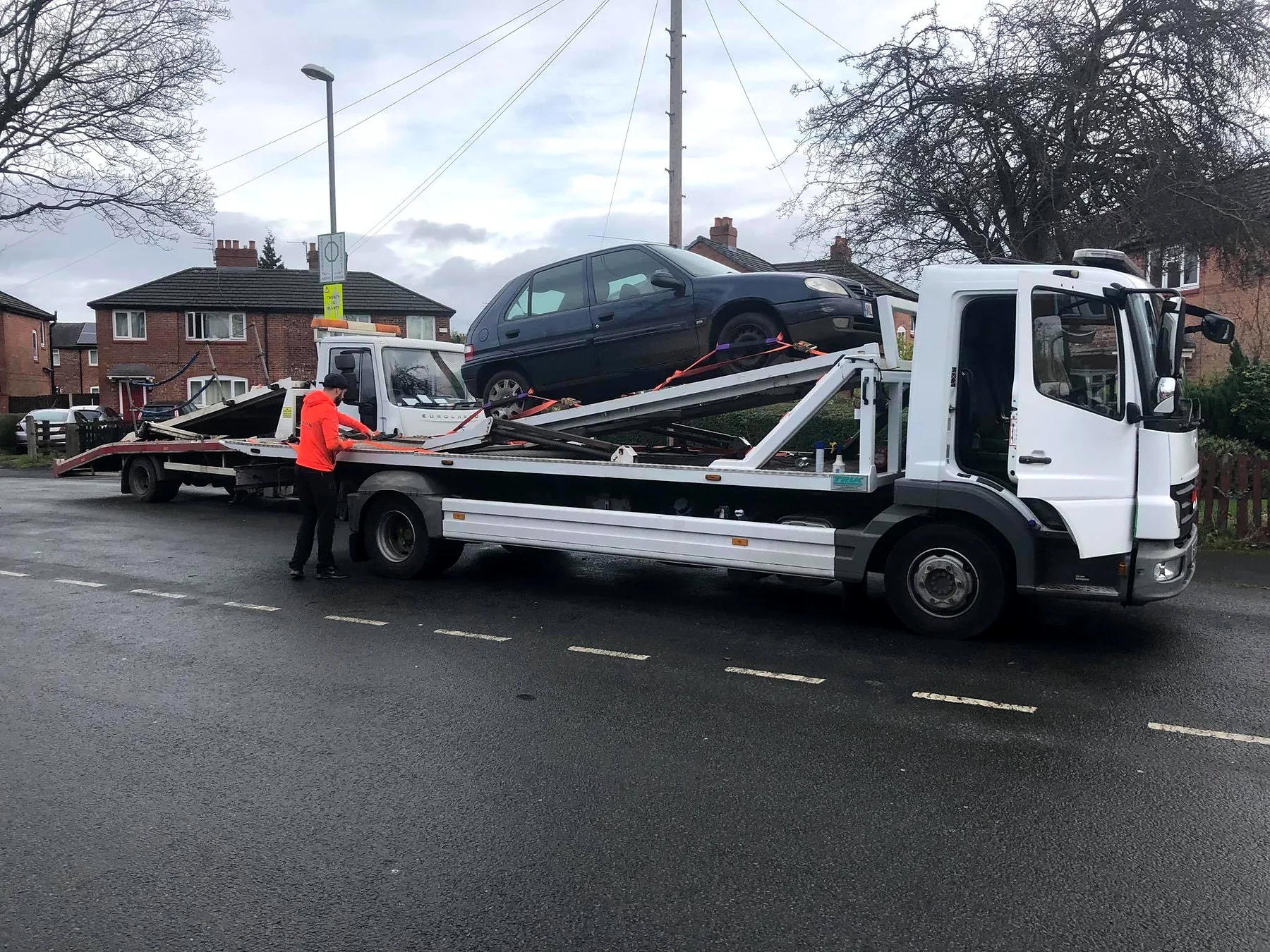
A slidebed or tilt-bed truck provides a loading platform. It is a different part of the process from the skates: one helps with movement and positioning, while the other carries the vehicle. Neither removes the need to check clearance, loading weight and access.
The useful questions before attendance
- Are the keys available, and can the steering unlock?
- Can the car select neutral and can the handbrake release?
- Which wheels cannot turn, and is the suspension intact?
- Is the vehicle on a slope, ramp or soft surface?
- Are there pillars, walls, parked vehicles or a low entrance nearby?
Photos of the whole vehicle and its surroundings can help explain the problem when it is safe to take them. Do not try to move an unstable vehicle to produce a better photograph.
Real accounts, without a universal promise
Our customer review page includes a workshop account describing a non-running vehicle that needed skates. Every job remains an individual assessment; previous work is not a guarantee that the same method fits another car or car park.
Tell us about electric drivetrains, four-wheel drive, modifications and missing parts. We can discuss the right approach before collection, rather than treating a difficult vehicle as an ordinary tow.
Check linked official guidance for current rules. Recovery arrangements depend on the individual vehicle and location.