
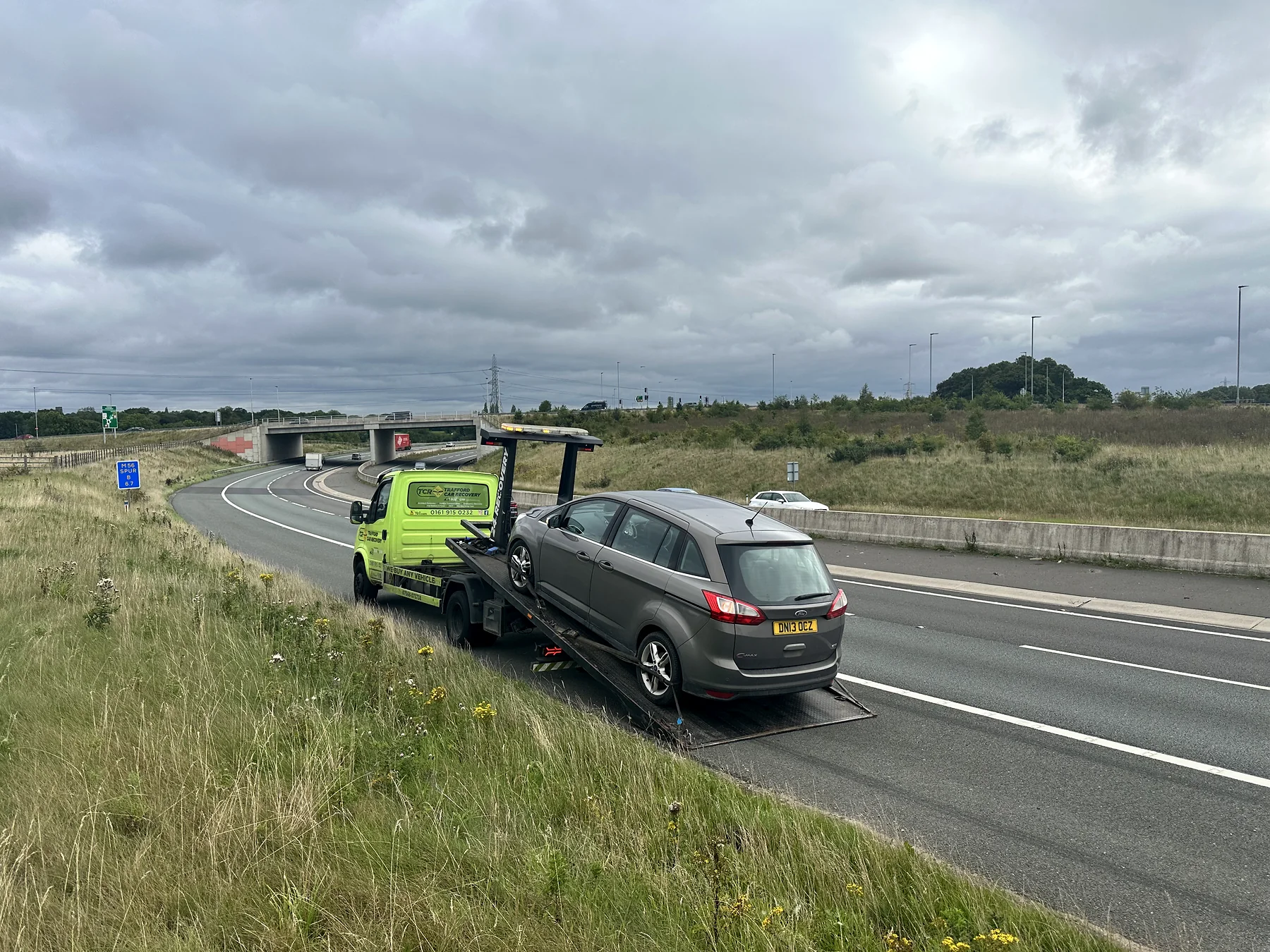
First, get to a place of relative safety
If possible, leave at an exit or reach a service area. Otherwise go left towards an emergency area or hard shoulder, stop as far left as possible and turn on your hazards. Use sidelights in poor visibility.
Leaving the vehicle depends on safety
Only exit away from traffic if safe and possible. Keep well clear of the vehicle and traffic, behind a barrier where available, watching for hazards beyond it. If you cannot exit safely, stay belted in and call 999. Do not attempt repairs or use a warning triangle on a motorway.
Get help before moving again
Use the emergency telephone for advice. In an emergency area, use that phone and follow the operator’s instructions before rejoining. These points summarise, rather than replace, the Highway Code, rules 275–279.
Arranging recovery once you are safe
When you can safely speak to us, tell us the motorway, direction of travel, location marker or nearest junction and what has happened to the vehicle. Say whether the police, traffic officers or another breakdown provider are already involved. Follow their instructions about access and recovery.
A postcode alone can be misleading on a motorway. A service-area name, carriageway direction and marker details help distinguish two locations that look close on a map but require different access. Do not move into danger to obtain more information.
The recovery team also needs the make and model, whether the vehicle can roll, and your preferred destination. Availability and the loading method need to be agreed for the actual situation. A website cannot promise an arrival time.
Check linked official guidance for current rules. Recovery arrangements depend on the individual vehicle and location.